
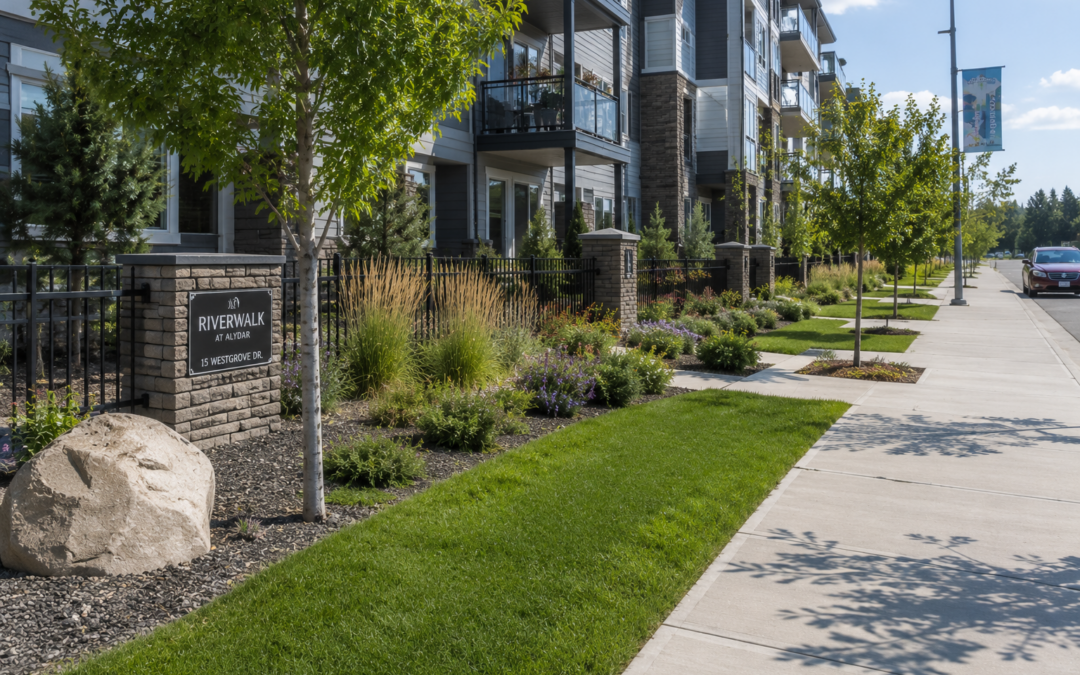
Commercial landscape maintenance increases property value by protecting curb appeal, preserving landscape assets, reducing deferred repair costs, supporting tenant satisfaction, and keeping the site easier to operate. It can also reduce liability exposure by addressing hazards such as snow, ice, uneven walkways, overgrowth, poor visibility, irrigation leaks, and neglected entrances before they become complaints or incidents.
For property managers in Okotoks, Calgary, and Southern Alberta, landscaping is not just a cosmetic line item. It is part of asset management. The exterior of a property shapes first impressions, affects day-to-day access, and signals whether the building is being professionally cared for.
Landscape Maintenance as Asset Protection
A commercial landscape includes living assets, built assets, and operational surfaces. Turf, trees, shrubs, beds, irrigation, mulch, walkways, entrance features, retaining walls, snow storage areas, and parking edges all need attention. When maintenance is skipped, the property may not fail all at once. It declines slowly.
Weeds spread. Turf thins. Beds lose definition. Irrigation leaks go unnoticed. Shrubs block signs or sightlines. Mulch decomposes. Trees become stressed. Small drainage problems become persistent ice or mud. By the time a board or owner notices, the fix is often more expensive than the prevention would have been.
Kayben’s commercial maintenance programs are designed for year-round care, including turf, irrigation, garden beds, property enhancements, seasonal cleanups, and snow and ice management. That full-season view is what protects the property as an investment.
Curb Appeal and Leasing Confidence
People judge a property before they read a sign, meet a manager, or tour a unit. For retail plazas, curb appeal affects whether customers feel the site is active and safe. For multi-family communities, it affects how residents feel about paying rent or condo fees. For institutional and care properties, it contributes to trust before a family walks in the door.
Strong maintenance creates a baseline of order. Lawns are cut before they look shaggy. Beds are edged and weeded. Entrances are clean. Dead plant material is removed. Seasonal transitions are handled before they become obvious. The result is not necessarily flashy. It is professional, consistent, and reassuring.
That consistency can support property value because exterior neglect often makes buyers, tenants, and visitors wonder what else is being neglected.
Reducing Deferred Maintenance
Deferred landscape maintenance is expensive because outdoor problems compound. A dry zone caused by a broken irrigation head can kill turf or plants. Poor drainage can damage beds and create winter ice. Unmanaged weeds can take over mulch and spread into neighbouring areas. Overgrown shrubs can block lighting, signage, and pedestrian visibility.
A proactive maintenance contractor flags small issues early. That might mean a mulch top-up, a damaged irrigation head, a failing shrub, a pothole near a landscape edge, or a walkway area that needs repair. These are not just landscaping notes. They are operational notes for the property manager.
When a site needs larger upgrades, maintenance should connect to commercial landscape construction so the property can move from patching symptoms to solving the underlying issue.
Liability Starts With Everyday Hazards
No maintenance program can remove all risk. Alberta weather changes quickly, and outdoor sites are used by people with different footwear, mobility, and attention levels. But a good program can reduce preventable hazards and create a clearer record of care.
The Canadian Centre for Occupational Health and Safety identifies common slip causes such as wet surfaces, weather hazards, and walking surfaces with inconsistent traction. It also identifies common trip causes such as poor lighting, clutter, and uneven walking surfaces. Those hazards show up outdoors all the time.
On a commercial property, landscape maintenance can help by keeping walkways clear, managing snow and ice, trimming vegetation around lights and signs, reporting uneven surfaces, directing irrigation away from pavement, clearing leaves and debris, and identifying places where water freezes repeatedly.
Snow and Ice Management Is Part of the Value Equation
In Okotoks and Calgary, winter service is often the most visible risk-management function. A property may look excellent in July, but if sidewalks, ramps, loading areas, and parking lots are unreliable in January, tenants and visitors will remember that more.
A strong snow and ice scope should define service triggers, priority zones, de-icing approach, inspection process, snow storage, hauling needs, and documentation. For property managers, documentation matters because it helps answer questions after a complaint: when was the site serviced, which areas were addressed, what conditions were reported, and what follow-up was needed?
Winter also affects the landscape itself. Snow piles can damage turf, shrubs, beds, and irrigation components. Planning snow storage with the landscape in mind reduces spring repair costs.
Irrigation and Water Management Protect the Budget
Water issues can quietly erode property value. Overwatering can waste money, wash out mulch, create soft turf, and push water onto hard surfaces. Underwatering can stress lawns, trees, and shrubs. Poorly aimed heads can create slippery walks or icy edges when temperatures drop.
Commercial irrigation should be monitored as part of the maintenance plan, not treated as a set-and-forget system. Startup, seasonal adjustment, repairs, and winterization all protect the investment. If the property has older equipment or recurring water waste, upgrading irrigation systems may pay off through healthier plant material and fewer emergency calls.
Better Maintenance Means Fewer Complaints
Property managers do not just manage landscapes. They manage emails, board expectations, tenant concerns, owner budgets, and emergency priorities. A professional maintenance program reduces noise because the site is on a predictable rhythm.
That does not mean nobody ever complains. It means complaints become easier to resolve. If there is reporting, photos, service history, and one accountable contact, the manager can answer quickly instead of chasing crews or guessing what happened.
Kayben’s commercial maintenance model emphasizes a single accountable team, clear communication, reporting, deficiency tracking, and year-round service. Those systems are valuable because they reduce oversight time, not just grass height.
What Property Managers Should Measure
The value of maintenance is easiest to see when you measure the right things: number and type of resident or tenant complaints, repeat issues by location, irrigation repairs, snow and ice response notes, seasonal enhancement costs, dead plant replacement frequency, walkway deficiencies, and time spent managing contractor follow-up. A retail plaza may care most about entrances, signage beds, parking edges, and snow piles. A condo board may care about resident complaints, turf consistency, and predictable budgeting. A care campus may care most about clear access, calm presentation, and reliable documentation.
This turns maintenance from a subjective opinion into property intelligence. If one entrance always ices up or one bed always fails, the property can budget for a better fix. That is the layer generic commercial landscaping pages often miss: the landscape is not just scenery, it is part of tenant experience, operating risk, capital planning, and brand trust.
Frequently Asked Questions:
Does landscaping really affect commercial property value?
Yes. Landscaping affects first impressions, tenant satisfaction, asset condition, and perceived management quality. It also protects living and built landscape features from decline, which can reduce costly catch-up work later.
Can maintenance eliminate liability?
No maintenance contractor can eliminate risk, and this article is not legal advice. However, proactive maintenance can reduce preventable hazards, improve documentation, and help property managers respond more effectively to outdoor safety concerns.
What should be documented in a commercial maintenance program?
Useful documentation may include completed visits, snow and ice service, deficiencies, photos, irrigation issues, repair recommendations, weather-related concerns, and approved extras. Documentation should match the size and risk level of the property.
Treat the Landscape Like Part of the Asset
Commercial maintenance is not just about making grass shorter. It is about protecting property value, reducing operational friction, and keeping the site safer and easier to manage through every season. If you manage a commercial property in Okotoks, Calgary, or the surrounding area, Kayben can help build a practical commercial maintenance scope around your site, budget, and risk priorities.